What is a prebiotic?
Quick answer: Prebiotics are fibres that your body cannot digest but the bacteria in your gut can. Here is what that means, how prebiotics differ from probiotics, and where to find them.
Key points
- A prebiotic is a fibre that feeds beneficial gut bacteria.
- Probiotics are live bacteria; prebiotics are their food.
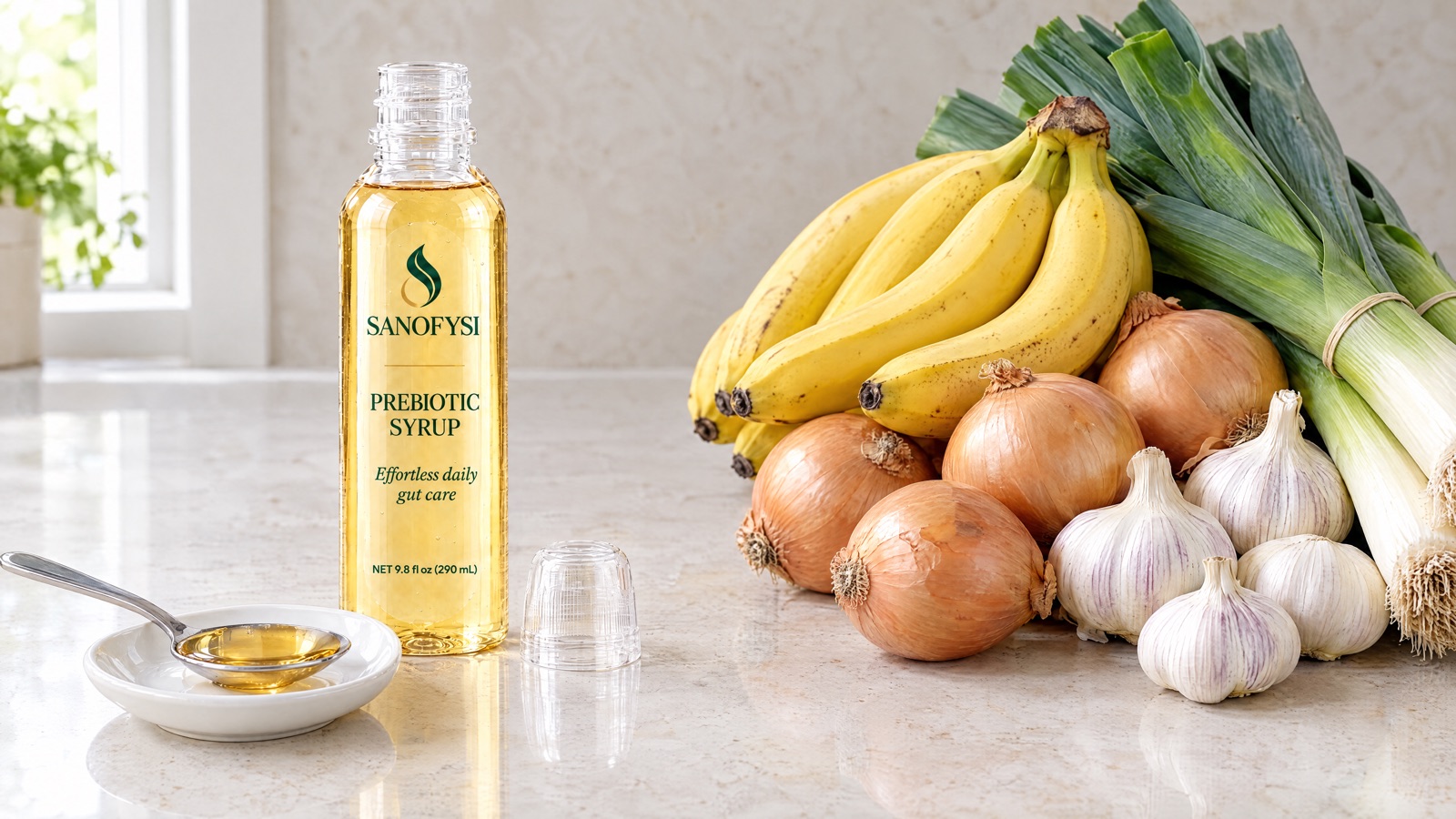
- Onions, garlic and bananas contain prebiotic fibre, but only a little per serving.
- One 15 mL spoon of prebiotic syrup provides 14.3 g.
The short answer
Your large intestine is home to trillions of bacteria, together called the gut microbiome. They need to eat, and what they eat is fibre that passes through your stomach and small intestine undigested. A prebiotic is a type of that fibre: one that beneficial bacteria in particular can use.
When bacteria break prebiotic fibre down, they produce compounds called short-chain fatty acids. Researchers are studying these closely because they appear to play a part in how the gut lining and the rest of the body work.
Prebiotics vs probiotics
The two words are easy to mix up.
- Probiotics are live bacteria, found in foods such as yoghurt and other fermented foods, or in supplements.
- Prebiotics are the fibres those bacteria feed on.
A simple way to remember it: probiotics are the seeds, prebiotics are the fertiliser. You can take them together, and many people do.
Which foods contain prebiotics?
Prebiotic fibres occur naturally in many everyday plants:
- Onions, garlic and leeks
- Bananas, especially when slightly green
- Oats and other whole grains
- Beans, lentils and cowpeas
- Asparagus and chicory root
The catch is quantity. Most of these contain only a small amount per serving, so you would need to eat a wide mix every day to get a meaningful intake.
What is FOS?
FOS stands for fructooligosaccharides, also called oligofructose. It is one of the most studied prebiotic fibres and is the same kind of fibre found in onions, bananas and chicory. It is soluble, so it dissolves in liquid, and it tastes mildly sweet.
That is why it works well as a syrup. Sanofysi Prebiotic Syrup is 95% FOS, and one 15 mL spoon provides 14.3 g of fibre.
The easy way to get prebiotics every day
You could eat onions, garlic, leeks and bananas at every meal. Most people will not, and they would still get only a few grams. A prebiotic syrup does the same job in one step.
- Put it in a drink you already have. Tea, coffee, juice or a smoothie. One 15 mL spoon gives 14.3 g of prebiotic fibre.
- Go slowly. A sudden jump in fibre can cause gas or bloating. Start with a teaspoon and build up over a week or two.
- Drink water. Fibre works best with enough fluid.
- Keep your usual meals. Fruit and vegetables bring vitamins and minerals as well. The syrup takes care of the fibre.
Think of your gut as a garden
Picture a small garden. The plants are your gut bacteria. You can add new plants (probiotics), but if nobody waters or feeds the soil, they struggle. Prebiotic fibre is the feeding. It arrives in the large intestine intact, the bacteria ferment it, and the ones that thrive on it grow in number.
That is also why consistency matters more than quantity. A little prebiotic fibre every day does more than a large amount once a week.
Common questions
- Is prebiotic fibre the same as fibre?
- All prebiotics are fibre, but not all fibre is prebiotic. A prebiotic is a fibre that beneficial gut bacteria can use.
- Can I take prebiotics and probiotics together?
- Yes. They do different jobs and are often taken together. Probiotics are live bacteria and prebiotics are the fibre they feed on.
- Do prebiotics cause bloating?
- They can if you add a lot at once. Start with a small amount, build up over a week or two and drink plenty of water.
- What are prebiotics good for?
- Prebiotics feed the beneficial bacteria in your gut and count towards your daily fibre intake. They are a food for your gut bacteria, not a medicine.
- What is the difference between prebiotics, probiotics and postbiotics?
- Prebiotics are fibres that gut bacteria feed on. Probiotics are the live bacteria themselves. Postbiotics are the compounds the bacteria produce when they break prebiotics down, such as short-chain fatty acids.
- Which prebiotic foods are common in Nigeria, Ghana and Kenya?
- Onions, garlic, beans and cowpeas, oats, slightly green bananas and unripe plantain are everyday sources of prebiotic fibre or resistant starch across West and East Africa.
Sources
Fibre, the easy way
Sanofysi Prebiotic Syrup gives you 14.3 g of prebiotic fibre in one lightly sweet 15 mL spoon. Stir it into tea, coffee or breakfast.
Shop Prebiotic Syrup